Wednesday, July 18, 2012

Housebreaking Basics


The past few days I have received several calls from dog owners with housebreaking issues. I regularly hear from people with puppies or newly adopted, dogs but it always astounds me when I get calls from people with dogs that have lived with them for years and are not yet housebroken. Or even more shocking, when I get a call like the one I got a few days ago from a man who owns five adult Maltese dogs, none of whom are housebroken. Can you imagine the chaos?

I thought it might be time to post the Housebreaking Basics. Housebreaking is not that difficult once you get the hang of it. The keys are consistency and not putting your dog in the position where they can “go” indoors. Once they have not had any accidents for eight weeks (yes, eight continuous weeks), you can begin to trust them indoors and unsupervised, but not before then.   

Before we get to the rules of housebreaking let me review my definition of housebroken. I consider a dog housebroken when I can leave them alone and unsupervised, inside a home for up to eight hours (or more) and I can trust that dog will not urinate or defecate during that period of time. According to my definition, a dog that you can trust “most of the time” is not housebroken. Similarly, a puppy that has not “gone” indoors because you are taking her out every hour or so is not housebroken (But if you are doing this let me commend you on a great start to housebreaking! Keep it up!).  

Because I have such a strict definition of housebroken I need to be honest and inform you that not all dogs can be housebroken. The good news is, the vast majority can be.

Some dogs have physiological or health problems that will make housebreaking more difficult or even impossible. These conditions include things like irritable bowel disease, colitis, diabetes, urinary tract infections, and urinary incontinence. Also, medications like diuretics (often used for heart problems), prednisone and prednisolone (to name a few) will increase the frequency that a dog needs to urinate and/or defecate. These dogs will need to be on a stricter, and/or adjusted schedule. If you are concerned that your dog may have an underlying medical problem please do not hesitate to see a veterinarian immediately.

If you have a puppy it is important that you understand that a dog under six months of age may not be physiologically mature enough to be housebroken yet. Although some puppies will be housebroken as young as 16 weeks old (this is pretty young but I’ve seen it), most dogs will mature somewhere between four and six months of age. Just stick to the rules of housebreaking so that when your dog is physiologically mature enough to be able to do it, the basics are in place. Barring a physical problem, every dog over the age of 6 months is mature enough to be housebroken.

A dog under six months age may not be physiologically mature enough to be housebroken. 
Short of those very specific and very rare instances, every dog can be housebroken. Some basic rules for housebreaking follow:

1. Spay or neuter. Unspayed/unneutered dogs are significantly more likely to "mark" their territory. If your dog isn't already spayed or neutered, make an appointment to do so today.

2. If you know your dog needs to “go,” don't let him free inside the house until after he does. You’d be surprised how often people break this rule. Until he relieves himself he can be on a short leash attached to you, in the yard or in a small dog crate (just large enough for him to stand and turn around in but no larger).

3. If you don't know if your dog has “gone” (because you haven't been watching her), don't let her free inside the house until after she goes. Again, until she relieves herself she can be on a short leash attached to you, in the yard or in a small dog crate.
This dog crate is too large for the purpose of housebreaking because this dog could relieve herself in one corner of the crate and still have plenty of space to comfortably avoid the mess.


4. If you know your dog has BOTH urinated AND defecated, and he does not have a history of "marking", he may be free inside the house, but only in small areas and only while supervised for the first eight weeks.

5. Take your dog to the same spot in the yard every time she “goes.” That way you are making an association of action with place. When you bring her to the same spot in your yard every time she “goes” she will begin to think, this is where I do my business. An added bonus: you can save your lawn from destruction and won’t have to worry about avoiding dog piles all over the yard, too!

6. When you take your dog outside to “go” use a command like “go potty” or “do your business.” Adding a command will become very useful as he becomes more reliable. Just think of the time it will save you when you need to let him out before running a quick errand or giving him a break on a walk.

7. When your dog “goes” outside reward her with a reinforcing command like "good potty" or “good business” while she is in the act so she understands that this is what she should be doing and where she should be doing it.

8. If you catch your dog in the act of “going” inside DO NOT punish him. I know it’s difficult but it is not his fault he was put in a position to fail. Just take him outside immediately (while in the act, if necessary). Then reward him if he finishes his business outside (see #7).
What many people call a "guilty look" is really just a display of submission. This dog doesn't feel guilty, he just knows someone is mad at him and is trying to appease them.

9. NEVER punish your dog if you find that she has made a mess while you weren't around. This is really hard for people to understand but if she doesn’t know she needs to “go” outside then it makes sense to her to go inside. And since she doesn’t speak English you don’t have a way to link her action with the mess on the floor. It’s not that she doesn’t remember doing it; it’s just that she doesn’t find it as disgusting as you do. If you yell at her or rub her nose in it she will not understand why she is in trouble and may begin seeking out out-of-the-way places to relieve herself to avoid getting in trouble again (this is the dog that sneaks off to “go” behind the sofa when no one is watching). Plus, yelling and screaming and rubbing her nose in a mess will make you seem like a crazy person to her, which will destroy the trust she has in you and make it difficult to teach her anything.

Follow these rules and you’ll have one trustworthy pooch in no time!

Tuesday, July 17, 2012

Model Dog Photo Gallery

And it's ON! Check out some of the submissions for the Attaboy Model Dog contest. We'll post new submissions as they come in.

Atlas and Ajax Peterson are two dapper dandies. Plus, their clever owner used a lot of flattery when submitting this photo. Will it work? Will they be the new Attaboy Model Dogs? Quite possibly.


Just look at that mug! Riley Weisenbach has not one but TWO submissions. And twice the Riley is twice the fun! All's fair in love and contest winning, says handsome Riley.

The Alvarado Pack had not one, not two, but seven submissions! Stefanie is stacking the deck, hoping the odds are in her favor. Will one of these win?  

Amari

Little Lola

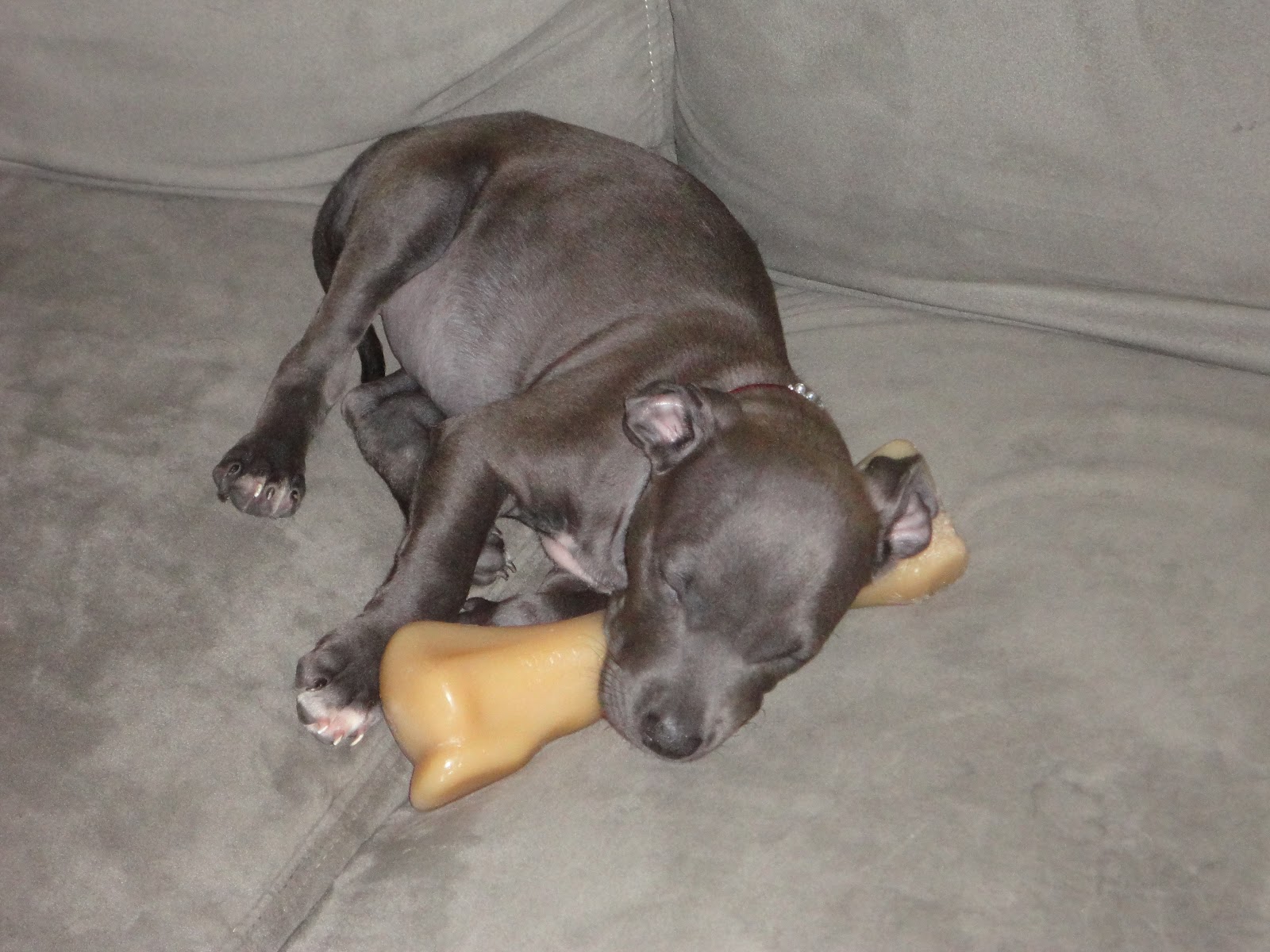
What's cuter than a sleeping pup?

Handsome Moose

What a happy dog! 

Moose and Dante

The Alvarados

Former attaboy trainee Vanya Lind Hagavei, who is now living in beautiful Norway, sent the following (several) photos of her BEAUTIFUL pack. I think she's in it to win it.


And the mighty cute Goetz family submission:

(left to right) Mr. Bruce, Taylor and Deacon Oswald Goetz 

The Kessels sent these photos of their pack:

Ike the old man.

Malcolm and Ike shacking up.

Malcolm cuddling with foster dog, Jade.

Get that toy, Malcolm!

And Vanya sent some more entries. Check out the wild Norweigan wolves she caught on camera! Just beautiful!


Julie sent this picture of her dog, Max:


Who will win??? Stay tuned to find out!

Monday, July 16, 2012

How to Walk a Dog


I have half joked many times that someday I’m going to write a book entitled The Zen of Walking Your Dog. I say half joked because there is definitely enough information about the proper way to walk a dog to fill an entire book. And as you already are learning, there is a Zen-like calmness that is required of both the walker and the walkee in order to create a good walk. Of course, this is not the proper format to write an entire book, but it is a good place to review dog-walking basics.


CHECK YOUR ENERGY


Cesar Millan says, “You are the center of your dog’s stability or instability.” He is absolutely right! This is not the first time (nor will it be the last) that I will remind you it is your energy that walks your dog, not your physical prowess or a fancy leash.  How many times have you seen a little dog control a big one? A Chihuahua can control a Great Dane, but the Great Dane must have respect for the Chihuahua first. That respect is earned through energy.

A Chihuahua can control a Great Dane, but the Great Dane must have respect for the Chihuahua first.


The walk is our way to mimic the hunt that canidae in the wild experience daily. Does the alpha wolf need to use a leash to control or send messages to subordinate pack members when they are tracking game? Of course not; like our dominant Chihuahua, an alpha wolf controls its pack members with his energy alone, and your energy must be both CALM and ASSERTIVE in order to convince a dog that they should follow you. Relax, take a deep breath, center yourself and think of something that makes you feel like the most powerful and confident person in the world. Then you are ready to walk your dog.

Your energy must be both calm and assertive in order to convince a dog that they should follow you.

DON’T FORGET YOUR DOG’S ENERGY


Your dog also needs to be in a balanced state before you start your walk. If you don’t start a good walk you won’t have a good walk.

I understand that many of you are thinking, “But I need to walk my dog to calm him/her down”. While it is true that the walk is key to draining energy which will, in turn, create a calmer dog, we need to remember the first rule of affection here: anytime you reward your dog you are nurturing whatever state of mind they are in.  So, if part of my vocabulary for affection includes giving my dog what s/he wants (this will be discussed further in future posts), and my dog wants to go for a walk (what dog doesn’t?), then I need to wait until my dog is CALM and SUBMISSIVE before I start my walk. Anything else and I am nurturing a dog with behaviors I do not want to live with. This can be tricky at first, but the extra few seconds you spend patiently showing your dog what is expected before you start your walk will inevitably be made up in time you save on correcting your dog’s behavior later.


USING THE LEASH AS A TOOL

While it’s true an alpha wolf can control pack followers with energy alone, we live in the human world, and the human world has leash laws. So if we are going to use a leash, we need to understand how it works as a tool.

While a buckle collar is necessary in order to have your dog wear her/his tags at all times (this is very important), it is inappropriate for a walk or any “working” situation. There are many different collars that work well for walking. I like martingale collars or “slip leads” for small or low to medium energy dogs. For higher energy dogs or dogs who need practice I recommend a “choke” collar (an unfortunate name but a good tool).  I only recommend a “pinch/prong” collar for high energy dogs over 40 lbs. (and even then I only recommend the Herm-Sprenger brand collar with no quick release as other pinch/prong collars are manufactured poorly so they can injure your dog or even pop off when you give a correction).


Additionally, it is important to understand that slip leads and choke chains only correct to one side. That means that you need to decide before you leash your dog which side you want to walk them on and keep with it throughout the walk. If you do not know how to tell which side your collar corrects to, a reputable pet store should be able to assist you. Martingale collars and pinch/prong collars will correct to either side, making them more hassle-free.

(LEASH) CORRECTING YOUR DOG CORRECTLY

So why not use a harness for walking your dog? Because, and this is absolutely the most important thing to understand about the way your dog works; DOGS PULL AGAINST TENSION. ALWAYS. It’s called opposition reflex, and it’s the reason why dogs pull sleds. Think about it, what is the first thing a musher does when getting his dog team ready to run the Iditarod? (the world famous sled dog race). Harness the dogs! Harnesses create tension across the chest, making the dogs want to pull.  So if you want your dog to do a pulling job (like pulling a wagon) use a harness. But if you want to walk your dog, use a leash and appropriate collar.

If you want your dog to do a pulling job use a harness.


Because dogs have opposition reflex, it is important to learn to give good corrections.  Your body should be relaxed when walking your dog. Hold the leash loosely at your side with your arms relaxed. I try to remind my clients that when you are walking a dog correctly, it should be like they are taking a nice walk and their dog happens to be with them. A leash correction is just a quick, firm, “pop” directly up or directly across the front of your body. Once you give the correction relax your arm again.  DO NOT LEAVE TENSION ON THE LEAD. This will only cause your dog to pull (and can potentially irritate your dog’s trachea to boot).
Dogs pull against tension. Always.

Because we have body memory, giving good corrections can be a tricky thing to retrain your body to do. But once you learn to do it correctly you will never do it wrong again!


FOLLOW THE RULES

Again, the whole point of the walk is to mimic the ritual of the hunt that a natural pack experiences daily. As such, the purpose of the walk is to drain the dog’s energy while they recognize the leader and practice a working and focused (calm/submissive or active/submissive) state of mind. To that end, dogs must walk behind the leader (when you take a step forward your dog’s nose should be behind your toe) and are not allowed to stop, sniff, urinate, defecate or alert during the walk.  Of course, you may instigate “breaks” for your dog if s/he has earned one.


I have found that some people are uncomfortable with this concept, asking, “But when does my dog get free time?” My answer is, “For most dogs, the rest of their life is free time. This is the time we require them to work.” 


Remember, dogs are social pack animals that were born with an innate desire to work for someone their whole life through.  Treating you dog like a dog is respecting who they are as a living being. Your dog will thank you for it!


Your Dog and the Dog Park; To Go or Not To Go?

Over the years the recurrent question of dog parks has come up. The main question people want to know is, “Are dog parks a good place to socialize my dog?”. A better question to ask yourself when considering taking your dog to a dog park is, “Is my dog ready for the all the challenges of a dog park?”. My personal experience with dog parks is that most people use them inappropriately. When used properly, dog parks can be a great learning experience for everyone!

A typical scenario follows. Mr. and Ms. Smith have been at work all day and all Fido has gotten is a total of two, 10 minute walks to relieve himself and sniff the corner fire hydrant. So when the Smiths come home, they are understandably tired and ready to relax for the evening while Fido is understandably crawling out of his skin for a lack of exercise. The solution? Take Fido to the dog park.
Fido is understandably crawling out of his skin.

I really do understand the thinking behind this misguided decision. The Smiths want to give their dog some exercise while they relax. Maybe they have even developed friendships with other locals at the dog park so they can chat while Fido “socializes.” They believe this is a good solution for everyone in the household, but I would argue they do not understand some key things about Fido.

WHAT THE SMITHS DON’T UNDERSTAND ABOUT FIDO

First of all, a dog should only be put in social situations with other dogs if they are in a balanced state of mind, otherwise they are a problem waiting to happen. As you may know by now, a balanced dog is in a calm and submissive state of  mind.

Dogs are GREAT at reading body language. If Fido is unbalanced when he enters the park, other dogs will accurately read his energy as unbalanced (in this case excited/submissive or excited/dominant) and may “correct” him in a an attempt to create balance. Fido doesn’t have to pick a fight to start the problem.

Fido doesn't have to pick a fight to start the problem.


Secondly, the Smiths did not take into account the fact that the Browns, the Greens and virtually every other family is at the dog park for exactly the same reason they are; and with dogs in the same excited state of mind! So now Fido, Fluffy and Socks are all running around like lunatics, practicing terrible behavior amongst each other. Eventually, in all the melee, a dog fight ensues and perhaps a dog or hapless person trying to break it up ends up needing medical treatment . All because the Smiths, Browns and Greens do not understand that, if not curbed, all that excitement will escalate into dominance. And unbalanced dominance will inevitably lead to aggression.      

 WHAT FIDO REALLY NEEDS

Fido, like all dogs, needs daily working exercise. Dogs are born with a “blueprint” that tells them to work for a leader approximately ninety percent of their waking hours, seven days a week, 365 days a year, with no holidays. No one can change what a dog’s needs are, so I can only state them and hope that people choose to get those needs met. But I feel very strongly that when you bring a dog home you have made an oath to take on all the responsibilities that come with sharing your home with that dog. Owning a dog is a privilege, not a right. We must get our dog’s needs met if we expect them to be balanced members of our household; it’s only fair.
Owning a dog is a privilege, not a right.

WHAT IS WORKING EXERISE?

Working exercise is the exercise dogs receive daily in a natural pack, and it is the exercise all dogs need. Working exercise has three parts:

1.       Dogs must burn energy while they,

2.       Recognize a leader (you) and,

3.       Practice a balanced state of mind.

While playing fetch with your dog or letting them race around in the backyard is fine, it doesn’t meet all three parts of the working exercise definition, so it is what I like to call “Twinkie Exercise.” You can give your dog Twinkie exercise after they have received working exercise, and in an appropriately proportionate amount.
Respect your athlete by providing them with working exercise every day.

Working exercise includes things like going for a walk or run, where the dog is required to focus and pay attention. Having your dog run alongside while you ride a bike, rollerblade or ride a skateboard would also be considered working exercise.  A dog in a natural pack will practice working exercise approximately 90 percent of their waking hours, anywhere from 20 to 40 miles a day. When you get a dog, you have invited an athlete to live with you! Respect your athlete by providing them with working exercise every day.  

SO, CAN I TAKE MY DOG TO THE DOG PARK?

Yes, in theory. But only if your dog is ready for the dog park.

IS MY DOG READY FOR ALL THE CHALLENGES OF A DOG PARK?  

Remember this question from the beginning of this article? You need to be able to answer this question honestly before going anywhere.

In my opinion, there is no one better at dog handling than world renowned dog behavior expert, Cesar Millan. In his first book, Cesar’s Way; The Natural, Everyday Guide to Understanding & Correcting Common Dog Problems, he writes, “While I’m running, most of the dogs will be off leash. If a dog needs to be leashed, and assistant will handle that. If there is any doubt about the dog’s ability to be an obedient pack member, he stays at home, and I exercise him in other ways” (p. 11, italics added for emphasis). Mr. Millan clearly uses common sense when exposing his dogs to new situations, and so should every dog owner.

The lesson to be learned from this excerpt; if you can’t control your dog at the dog park yet, don’t take him to the dog park. Instead, break down the challenge into smaller “exposures” you can work on more manageably with the goal of working up to a visit to the dog park. Similarly, if you can’t trust your dog off leash at the dog park yet, leave her on leash for now and use the leash as a teaching tool. There are no rules! Let your creativity and patience be the key to your problem-solving success!  But use common sense, too.

ADDITIONAL THINGS TO KEEP IN MIND

And speaking of common sense, let’s get back to the basics here. Remember to provide your dog with daily working exercise before going anywhere. It’s always best  to drain the your dog’s energy before introducing any challenge, especially one as big as a dog park. The dog park comes after the energy has been drained and the dog is in a balanced state of mind, otherwise they are a problem waiting to happen. I will also repeat, ad nauseam, that a balanced dog is in a calm and submissive state of  mind. So, (drum roll, please) your dog must be in a calm and submissive state of mind before going to the dog park. It’s as simple as that!
The dog park comes after the energy has been drained and the dog is
in a balanced state of mind.

If your dog is not 100% reliable, take a look at your dog’s energy and the energy of the other dogs before you enter the park. Is there a dog with dominant body language? Is he puffing out his chest, standing erect with ears and tail up, targeting other dogs? Is there an especially excited dog, being pushy and obnoxious, all the while ignoring her mortified owner’s pleads to come? Maybe this is not the day for introducing the park to your dog. Or maybe this is the perfect day to practice working on leash with your dog outside of the fenced area, that way your dog will get used to the energy of the dog park while practicing focus. If your dog has pretty good working skills you may want to practice with your dog on leash inside the dog park, taking this time to teach your dog that other dog’s bad behavior is to be avoided and ignored, and that she needs to remain calm and submissive no matter what state of mind the other dogs are in.   

Finally, the dog park is the place to go only when you are willing to pay attention. It is not the time to ignore your dog while you sit and read a book or chat with neighbors. While at the dog park remain relaxed but keep your eye on your dog’s energy, and the energy of other dogs in the park. A balanced dog will avoid dogs with bad energy and engage dogs with balanced energy. An unbalanced dog will go looking for trouble.

An unbalanced dog will go looking for trouble.

Dog parks are absolutely a great place for dogs to be able to experience what it is like to be among their own kind. Just make sure that everything is in place for a successful interaction and the experience will be enjoyable for dogs and humans alike. Remember, when used properly, dog parks can be a great learning experience for everyone.

Dog parks are absolutely a great place for dogs to be able to experience what it is like to be among their own kind.

This article was printed in the Spring/Summer 2011 issue of BellaDOG magazine.